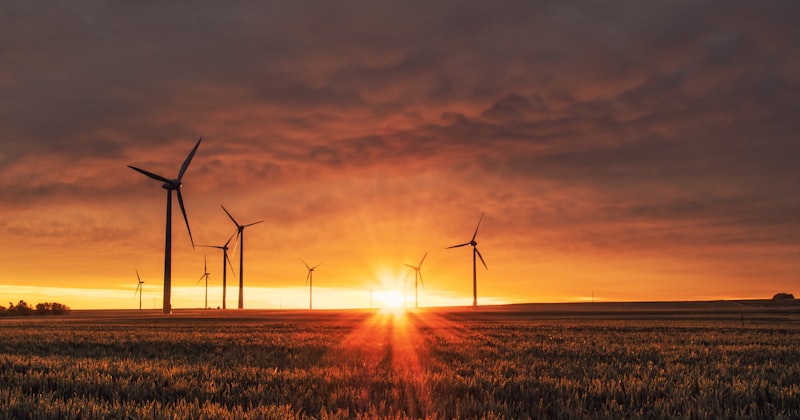
The Gulf has become one of the world's most active regions for utility-scale renewable energy. Abundant solar resource, cheap land, and sovereign-backed developers have produced some of the largest and lowest-cost solar projects ever built. As the UAE pursues Net Zero 2050 and Saudi Arabia pushes its Vision 2030 renewables targets, the sector is creating a growing number of automation and control systems roles. Engineers who sit at the intersection of traditional automation skills and power systems knowledge are finding exceptional opportunities.
Utility-Scale Solar
The UAE hosts several of the largest single-site solar plants in the world, including Noor Abu Dhabi at Sweihan, the Al Dhafra solar project, and the Mohammed bin Rashid Al Maktoum Solar Park in Dubai, which DEWA is building out in phases towards multi-gigawatt capacity. Saudi Arabia's programme, led by ACWA Power and others, includes Sudair and a long pipeline of further projects, and Oman, Qatar, and Kuwait are all adding capacity.
A gigawatt-scale solar plant is a serious control systems project. Inverter control and maximum power point tracking sit at the equipment level. Above that, a power plant controller manages active and reactive power, ramp rates, voltage and frequency response, and grid code compliance at the point of connection. SCADA aggregates tens of thousands of devices including string monitors, trackers, weather stations, and combiner boxes.
Single-axis tracker control is a distinctly regional problem. Trackers must stow against wind, and in the Gulf they must also cope with dust. Soiling is the biggest performance loss factor in desert solar, which is why robotic dry-cleaning systems are widely deployed and why soiling sensors feed directly into cleaning scheduling logic.
Concentrated Solar Power
Dubai's solar park includes one of the world's largest concentrated solar power installations, combining a central receiver tower with parabolic trough collectors and molten salt thermal storage. CSP is much closer to conventional process automation than PV: heliostat field control, molten salt loop temperature and flow control, thermal storage charging and discharging, and a steam turbine island with all the conventional power plant control that implies. For automation engineers with process backgrounds, CSP is one of the more interesting things happening in regional energy.
Battery Energy Storage Systems
Battery storage is scaling quickly across the region as a way to shift solar output into evening peak demand and to firm up grid stability. Grid-scale installations use PLCs and SCADA to manage charge and discharge cycles, coordinate with battery management systems, control thermal management, and respond to grid operator signals.
Key automation challenges include maintaining battery health through optimised charge and discharge profiles, managing thermal conditions in high ambient temperatures to prevent thermal runaway, and responding to transmission system operator requirements within very short timeframes. The HVAC and fire detection design around battery containers in a 50-degree environment is a genuine engineering problem in its own right.
Green Hydrogen and Ammonia
Green hydrogen production through electrolysis is an emerging sector with significant automation content. Electrolyser control systems manage cell stacks, water purification, gas compression, drying, and storage, and downstream ammonia synthesis adds a full process plant. Projects such as the NEOM green hydrogen development in Saudi Arabia, Masdar's hydrogen initiatives in the UAE, and hydrogen work around Oman's Duqm and Sohar clusters are moving from study to execution.
Hydrogen brings hazardous area design, gas detection, and functional safety back to the centre of the conversation, so engineers with oil and gas safety systems backgrounds transfer into it unusually well.
Nuclear and Low-Carbon Baseload
The UAE's Barakah plant supplies a large share of Abu Dhabi's clean electricity and changes the grid dispatch picture that renewables must operate around. Automation engineers working on grid integration, dispatch, and balancing services need to understand how a mixed nuclear, gas, and solar system behaves.
Skills and Training
Renewable energy automation builds on traditional PLC and SCADA skills but requires additional knowledge in power electronics, grid codes, and energy management systems. IEC 61850 for substation communication is particularly valuable, as is familiarity with IEC 60870-5-104 and DNP3 for control centre links.
Engineers transitioning from oil and gas, water, or manufacturing usually find their PLC programming, instrumentation, and SCADA skills transfer directly. The gap is normally power systems fundamentals rather than controls.
Salary and Employment Outlook
Renewable energy automation offers competitive packages reflecting sector growth and a shallow local skills pool. Indicative monthly ranges from public job-market data put plant SCADA and control engineers at roughly AED 12,000 to 22,000, with senior control systems engineers in storage and hydrogen projects at around AED 24,000 to 40,000. Commissioning roles on large projects often carry site allowances and rotational arrangements.
The employment outlook is strong. The UAE, Saudi Arabia, and Oman have all committed to large renewable capacity additions, and every gigawatt built needs commissioning engineers first and operations and maintenance engineers for decades afterwards.