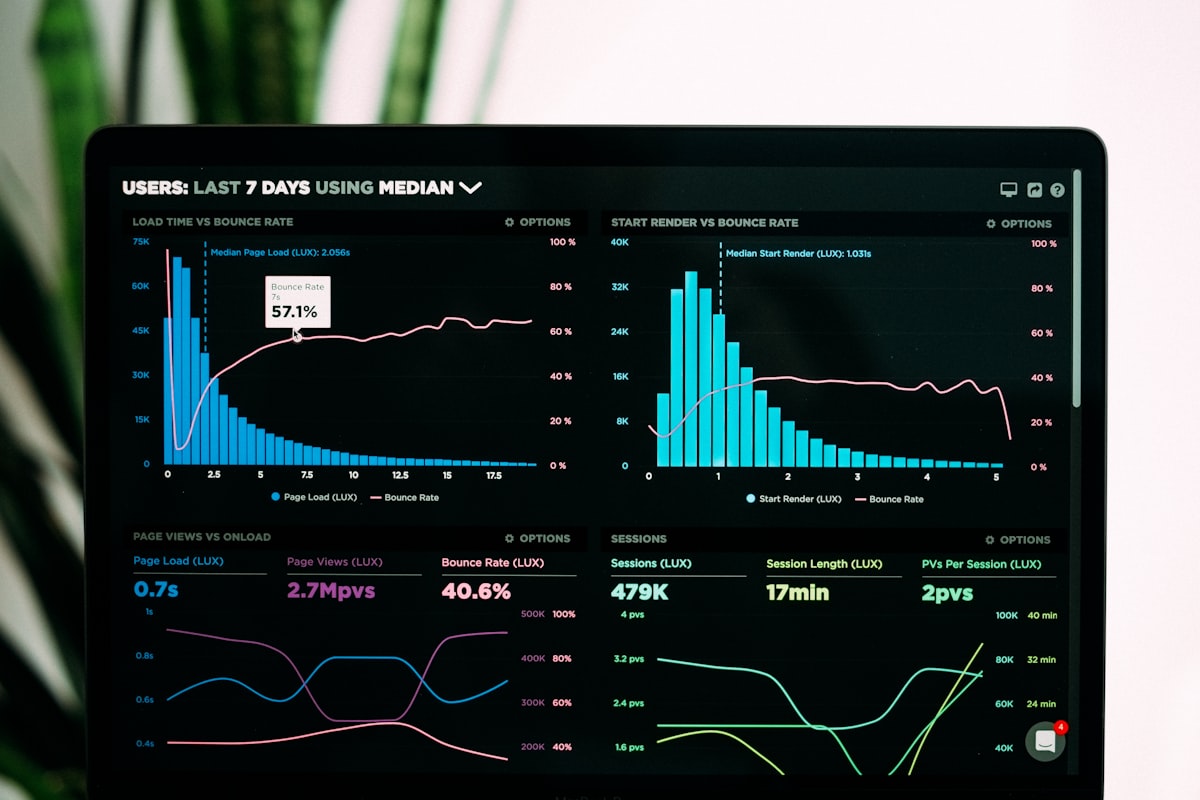
What Is SCADA?
SCADA stands for Supervisory Control and Data Acquisition. In plain English, it is a system that lets operators monitor and control industrial processes from a central location. Think of it as the dashboard and remote control for a factory, water treatment plant, power station, or any large-scale industrial operation.
If PLCs are the brains that control individual machines, SCADA is the central nervous system that connects everything together and gives humans visibility and control over the entire process.
How a SCADA System Works
A SCADA system has several key components that work together:
- Field devices (PLCs and RTUs): These sit on the factory floor or at remote sites, reading sensors and controlling actuators. They are the hands and eyes of the system.
- Communication network: Ethernet, fibre optic, wireless, or even satellite links that carry data between field devices and the SCADA server.
- SCADA server: A computer (or cluster of computers) that collects data from all field devices, processes it, stores it, and makes it available to operators.
- HMI (Human Machine Interface): The graphical screens that operators use to see what is happening and issue commands. These display process diagrams, alarm lists, trends, and reports.
- Historian: A specialised database that stores time-stamped process data for trending, reporting, and analysis. Historians can hold years of data at second-level resolution.
- Alarm management system: Monitors every process variable against defined limits and alerts operators when something goes out of range.
Real-World SCADA Examples
Desalination and Water Treatment
Across the Gulf, SCADA systems monitor water quality parameters (pH, turbidity, conductivity, chlorine levels), control high-pressure pumps and chemical dosing, manage reservoir and product tank levels, and alert operators to equipment failures. At a large reverse-osmosis or thermal desalination plant, a single control room oversees the whole works from SCADA screens.
Manufacturing Facility
In a food processing factory of the kind operated by Agthia, Al Ain Farms or Almarai, SCADA tracks production rates, monitors oven and pasteuriser temperatures, controls conveyor speeds, logs batch records for quality assurance, and generates shift reports. It provides the real-time visibility needed to keep production running efficiently.
Power Distribution Network
Utility operators such as DEWA, EWEC and SEWA use SCADA to monitor substations across an emirate, control circuit breakers, balance loads, and respond to faults. The SCADA system enables remote operation of equipment that may be hundreds of kilometres away in the Al Dhafra region or the northern emirates.
Oil and Gas Pipeline
Pipeline SCADA systems monitor pressure, flow rate, and temperature at points along the line. They detect leaks, control compressor and pumping stations, and manage product transfer between fields, processing plants and export terminals such as those at Ruwais and Fujairah.
Major SCADA Platforms
Several SCADA platforms dominate the market. The ones you are most likely to encounter in the UAE and the wider Gulf are:
Siemens WinCC
Tightly integrated with TIA Portal and Siemens PLCs. WinCC is the standard choice for Siemens-based installations. It comes in two flavours: WinCC Professional (integrated in TIA Portal) and WinCC OA (Open Architecture) for large-scale distributed systems.
Inductive Automation Ignition
A modern, web-based SCADA platform that has gained enormous popularity in recent years. Ignition uses a server-client architecture with unlimited client licences, making it extremely cost-effective. It is particularly strong in the Americas but growing rapidly across the Middle East, especially with system integrators building new greenfield plants.
Rockwell FactoryTalk
The SCADA platform from Rockwell Automation, designed for seamless integration with Allen-Bradley PLCs. FactoryTalk View SE is the traditional SCADA product, while FactoryTalk Optix is the newer, modern alternative.
Schneider Electric AVEVA
Formerly Wonderware, AVEVA is a veteran SCADA platform with deep roots in process industries. System Platform and InTouch are its core products.
GE iFIX and CIMPLICITY
Common in utilities and process industries, GE's SCADA products offer robust historical data management and integration with GE industrial equipment.
SCADA vs HMI — What Is the Difference?
This is a common source of confusion. An HMI is a single operator interface, typically attached to one machine or one area of a process. SCADA is a system-wide platform that aggregates data from multiple PLCs and provides centralised monitoring, control, alarming, and historical data storage. In practice, SCADA includes HMI functionality but adds enterprise-level features on top.
The SCADA Salary Premium
Engineers with SCADA skills consistently earn more than those with PLC skills alone. Indicative UAE monthly ranges from public job-market data:
- PLC Engineer (no SCADA): AED 9,000 to AED 16,000 per month
- PLC + SCADA Engineer: AED 12,000 to AED 22,000 per month
- SCADA Specialist: AED 18,000 to AED 30,000 per month
- Senior SCADA / Controls Architect: AED 25,000 to AED 40,000+ per month
SCADA skills are particularly well compensated in the water and desalination, oil and gas, and power utility sectors — precisely the sectors that dominate industrial employment in the UAE and across the GCC, where large-scale distributed systems are the norm.
Learning SCADA
SCADA development builds on PLC programming skills. You need to understand PLCs first because SCADA systems communicate with and depend on PLCs. Once you have a solid PLC foundation, learning SCADA involves understanding database concepts, networking, screen design principles, alarm philosophy, and the specific platform you will be working with.
Most quality PLC training programmes include an introduction to SCADA/HMI development as part of the curriculum. Our professional courses cover HMI and SCADA fundamentals using both Siemens WinCC and web-based platforms. Contact us to learn more about adding SCADA skills to your toolkit.